
 Find Schools
  Classifieds
  Experts
  Jobs
Jobs  Family Activities
  News & Publications
  Events
  Services
  Articles
  Community
 - The Go-To Directory for Quality Education Call us on: +86 139 1706 3480
- font_download Advertise With Us
- store List Your Organization
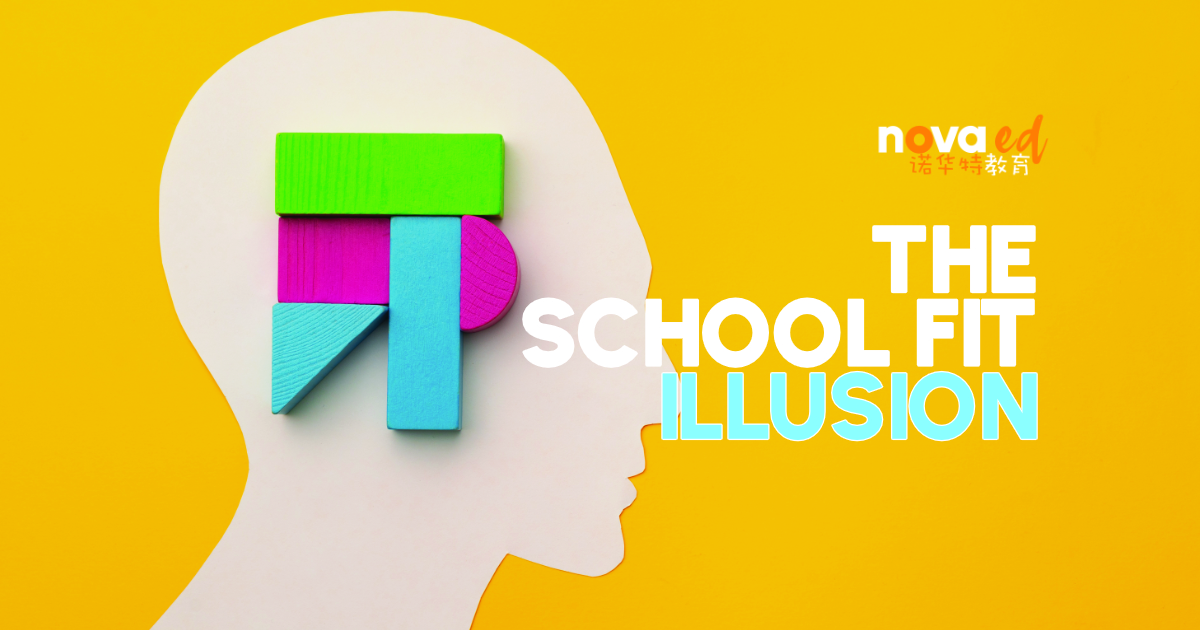
In competitive education markets around the world, school selection has become a decision of strategic consequence. Families analyze rankings, university placement records, curriculum pathways, faculty credentials, extracurricular offerings, and tuition structures with remarkable care. The process is deliberate, informed, and often emotionally intense. For many parents, it represents one of the most significant investments they will make in their child’s future.
And yet, despite this diligence, a recurring pattern quietly unfolds.
A capable student enrols in a highly regarded institution. The school is respected. Its graduates gain admission to leading universities. Its facilities are modern. Its academic standards are demanding. On paper, the choice appears unassailable.
Within months — sometimes within a year — subtle shifts begin to surface. Engagement becomes measured rather than enthusiastic. Effort becomes compliance rather than curiosity. Performance plateaus rather than accelerates. Stress becomes more persistent, though not always immediately visible. Confidence becomes conditional, dependent on outcomes rather than rooted in identity.
Nothing dramatic has failed. But something is not aligned.
After twenty-five years advising families across international, bilingual, and national systems — across Asia, Europe, and other global markets — one truth has repeated itself with remarkable consistency: institutional excellence does not automatically equal individual compatibility. A school can be objectively strong and still be strategically misaligned for a particular student at a particular stage of development.
This distinction is rarely examined deeply enough.
Rankings and reputation serve an important purpose. They signal institutional consistency, academic rigour, and peer quality. They provide families with an initial filter in a crowded market. In highly competitive cities such as Shanghai, Singapore, London, or Dubai, reputation often functions as shorthand for quality.
However, reputation is a population-level metric. It reflects aggregate outcomes across hundreds or thousands of students. It does not measure the interaction between a specific student’s internal architecture and the specific environmental demands of that institution.
Consider two academically strong schools with equally impressive university outcomes. One operates within a highly structured progression model, emphasising clarity, sequence, and cumulative mastery. The other prioritises inquiry, autonomy, and conceptual exploration. Both may deliver outstanding results.
For a student who thrives on clear benchmarks and defined expectations, the first environment may feel energising and confidence-building. The same student may experience sustained ambiguity in the second environment as cognitive fatigue. Conversely, a student who draws energy from intellectual exploration may flourish in the inquiry model and quietly disengage in the structured system.
In both cases, the schools remain excellent. The variable that changes is compatibility.
When compatibility is overlooked, misalignment is often misdiagnosed. Families may attribute struggles to adjustment periods, effort fluctuations, or developmental timing. In reality, structural mismatch frequently underlies the friction.
School comparison conversations typically centre on visible attributes: curriculum type (IB, A-Level, AP), campus infrastructure, class size, extracurricular breadth, location, and cost. These are tangible, measurable factors. They are also relatively easy to compare.
What is rarely evaluated with equal rigour are the internal variables that shape how a student experiences those external conditions.
Students differ meaningfully in how they approach complexity. Some prefer structured scaffolding before independence; others prefer autonomy before precision. Some process information sequentially; others synthesise patterns holistically. Some derive motivation from competition and public benchmarks; others from mastery and internal progress. Some recover quickly from setbacks; others require more time and structured support to recalibrate.
These internal patterns influence daily experience in subtle but powerful ways. Over time, they determine whether academic challenge translates into growth or into sustained stress.
Without a structured lens for examining these dimensions, school selection becomes informed but incomplete. Families gather substantial data about institutions while remaining less certain about the interaction between those institutions and their child’s learning architecture.
One of the most misunderstood phenomena in elite education environments is high-ability underperformance. Families often assume that placing a capable student in a rigorous system will automatically amplify potential. The logic appears straightforward: demanding environments should elevate strong learners.
In practice, intensity magnifies both strengths and mismatches.
A performance-driven culture that emphasises rankings and comparative outcomes may energise students who respond positively to external benchmarks. The same environment may erode intrinsic motivation in students whose drive is mastery-oriented rather than comparative. Over time, these students may protect performance rather than pursue depth, narrowing intellectual risk-taking to preserve outcomes.
Similarly, highly collaborative classroom cultures may stimulate socially attuned learners who derive energy from interaction. For more reflective or independent learners, constant collaboration may create cognitive exhaustion rather than inspiration.
These patterns do not reflect differences in intelligence or potential. They reflect differences in compatibility.
Misalignment rarely produces immediate academic collapse. Grades often remain acceptable. Behaviour remains compliant. The shift occurs internally — in the depth of curiosity, in willingness to take intellectual risks, in identity formation as a learner.
Those internal shifts accumulate over years.
Educational misalignment is seldom dramatic at first. It is incremental and cumulative.
Students may begin to associate challenge with anxiety rather than development. They may reduce exploration to avoid negative evaluation. They may recalibrate aspirations downward to minimise friction. Alternatively, they may sustain high performance at the expense of emotional equilibrium, interpreting stress as an unavoidable companion to achievement.
Neither trajectory reflects optimal development.
The more consequential question for families is not simply, “Is my child coping?” It is, “Is this environment strengthening or distorting their academic identity?”
Academic identity — how a student perceives their capabilities, motivation, and relationship to challenge — has profound long-term implications. It influences subject choices, risk tolerance, resilience, and future pathway decisions.
When alignment is strong, challenge builds capacity. When alignment is weak, challenge builds fatigue.
The education industry often speaks of excellence as though it were universally transferable. Certain schools are framed as categorically superior, implicitly assumed to optimise outcomes for all capable students.
Experience suggests a more nuanced reality.
Excellence is contextual. It emerges from the interaction between learner characteristics and institutional philosophy.
An academically intense environment that prioritises independence and synthesis may be transformative for one student and destabilising for another. A tightly sequenced curriculum that emphasises mastery through repetition may provide clarity and momentum for some while constraining intellectual spontaneity for others.
Neither model is inherently better. The determining factor is fit.
When compatibility is strong, effort converts efficiently into growth. When compatibility is weak, effort must compensate for structural friction. Over time, sustained compensation becomes unsustainable.
In modern education markets, information is abundant. School websites, directories, open days, parent forums, and ranking tables provide unprecedented access to institutional data. What remains scarce is structured interpretation.
Strategic school decision-making requires shifting from comparing institutions in isolation to examining the interaction between learner and environment.
This begins by mapping patterns within the student:
How do they respond to ambiguity?
How do they metabolise feedback?
Where does pressure expand capacity, and where does it contract confidence?
Which social environments energise them, and which deplete them?
These are not questions that can be answered superficially. They require reflection, structured inquiry, and experience across systems.
Over decades of advisory work, one consistent observation has emerged: families who approach school choice through a compatibility lens report greater long-term stability, fewer disruptive transfers, and more confident academic progression.
Reputation informs a decision. Compatibility sustains it.
The prevailing question in competitive education markets is, “Which school is the best?”
A more strategic question is, “Which environment allows this student to thrive with the least unnecessary friction and the greatest long-term momentum?”
That shift changes the decision-making process entirely.
It moves families from reactive comparison to strategic alignment. It reframes school selection from prestige acquisition to developmental optimisation.
In high-stakes education environments — particularly in major international hubs — the consequences of misalignment compound over years. Conversely, the benefits of strong alignment compound as well.
The distinction is subtle at first. Over time, it is decisive.
Author: Peter. J. Bezuidenhout (Founder - NovaEd)

Join the NovaEd Network and Make Your Mark in Education
ADD YOUR LISTING arrow_forward


Copyright © 2025 Novateur Consulting | Nova Education (沪ICP备2025129833号). Proudly Powered By www.cu3ed-design.com









.jpg)


 Support