
 Find Schools
  Classifieds
  Experts
  Jobs
Jobs  Family Activities
  News & Publications
  Events
  Services
  Articles
  Community
 - The Go-To Directory for Quality Education Call us on: +86 139 1706 3480
- font_download Advertise With Us
- store List Your Organization
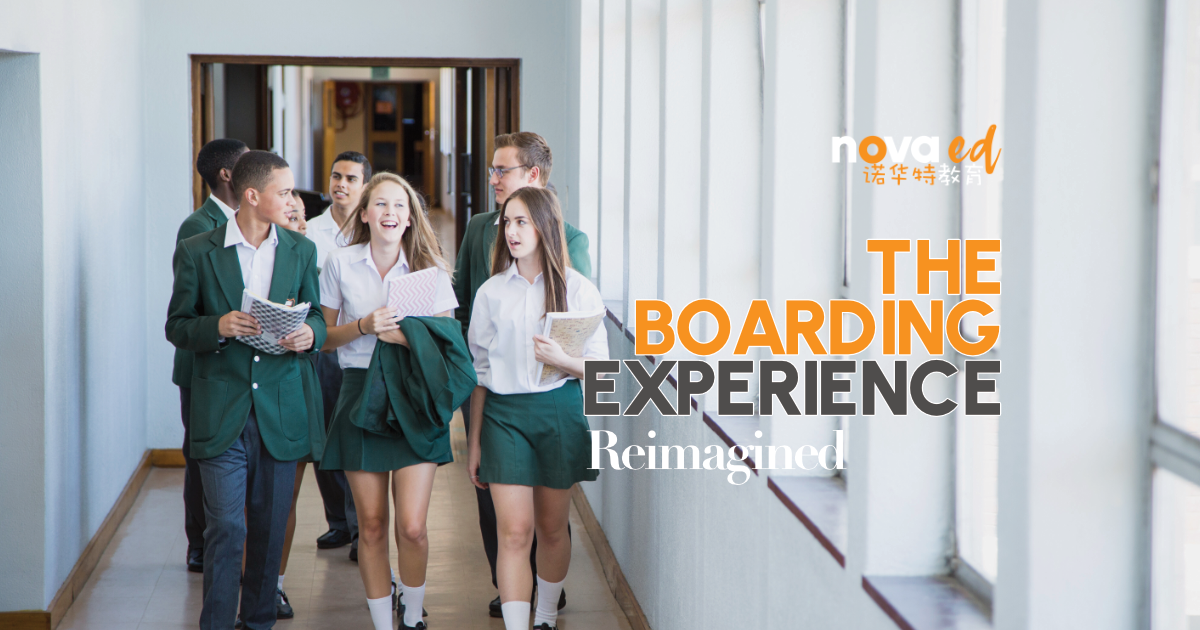
Boarding education is experiencing a renewed wave of interest around the world. Once associated with tradition, discipline, or necessity, it has quietly evolved into one of the most intentional, nurturing, and transformative forms of education available today. Parents are no longer simply asking whether boarding is appropriate; they are increasingly wondering whether it might, in fact, be the most profound developmental opportunity they can offer their children.
In a time when emotional resilience, independence, global awareness, and social adaptability matter as much as academic achievement, boarding offers a uniquely powerful ecosystem. It creates a miniature world where young people learn to live, study, grow, and collaborate within a carefully structured community — one that mirrors the complexities and opportunities of adult life, but with safety nets everywhere.
For decades, boarding was viewed through a narrow lens: a place of strict routine, distant authority, and students left to fend for themselves. Today’s reality is entirely different. Modern boarding environments are built around wellbeing, belonging, and human growth. They combine the warmth of community with the structure of routine and the guidance of educators who are trained not only to teach, but to support the emotional and social development of young people.
Families in China, Asia, and around the world are increasingly recognizing that children thrive when placed in environments that broaden their horizons. Boarding does not diminish family connection; rather, it expands a child’s sense of possibility by allowing them to experience life beyond the family home. What once felt like separation is now understood as an opportunity for guided independence.
The boarding renaissance is not about sending children away — it is about inviting them into an environment designed to build them up.
What makes boarding uniquely effective is not a single factor, but the integration of multiple developmental supports into one daily rhythm.
Independence grows naturally when students learn to manage their own routines. Waking on time, organizing their belongings, completing responsibilities, and navigating small challenges throughout the day helps students develop self-discipline without feeling overwhelmed. It is independence, but with structure.
Confidence, meanwhile, emerges through repeated experience. Living in a community of peers requires students to express themselves, make decisions, solve interpersonal issues, and attempt new activities. Rather than being shielded from difficulty, they are supported through it — and with each small success, confidence strengthens.
Academically, boarding schools provide consistency that many families struggle to maintain at home. With set study hours, dedicated learning spaces, and teachers nearby, students develop strong study habits that last far beyond their schooling years. The absence of long commutes or household distractions allows them to focus more deeply and feel a sense of academic purpose.
Perhaps most importantly, boarding environments create social maturity. Living with others teaches patience, empathy, communication, and compromise. Students learn how to navigate friendships, respect differences, and work collaboratively — skills that increasingly define success in higher education and the future workplace.
Across all these areas, the thread that holds the boarding experience together is wellbeing. Modern boarding schools invest heavily in pastoral care. House parents, counsellors, mentors, and wellbeing programs ensure that students are emotionally grounded, supported, and understood. Boarding today is not a place where students are left alone; it is a place where they learn to stand on their own with people beside them.
A growing global trend is the rise of short-term residential programmes — experiences lasting one to four weeks that offer a taste of boarding life without the long-term commitment. Families are turning to these “micro-study-abroad” opportunities as a gentle and effective way to introduce children to independence.
Short-term boarding allows students to experience the routines, responsibilities, and cultural immersion of residential life in a safe, time-bound environment. Within days, children begin to adapt. They form friendships, navigate social spaces, practice English, try new activities, and gain a sense of their own capability. Parents often describe the changes as surprising in both speed and depth: a formerly shy child becomes more outspoken, a dependent child becomes more organized, and a hesitant child becomes willing to try.
These programmes are especially valuable for families considering future international education. They offer emotional preparation, cultural orientation, and confidence-building in a way no classroom or weekend activity can replicate.
Boarding life follows a rhythm that is both predictable and varied — a balance young people need to feel secure while staying engaged. Mornings begin with personal routines and shared breakfast, followed by a full academic day enriched by sports, arts, and co-curricular activities. Afternoons might include team practices, music rehearsals, creative workshops, or quiet relaxation. Evenings, often the heart of boarding life, bring supervised study sessions, communal time in dorms, conversations with house staff, and moments of laughter with friends.
Over time, these rhythms shape identity. Students learn not just how to function independently, but how to thrive within a community. They gain awareness of their needs, preferences, strengths, and weaknesses. They learn to ask for help, to offer support, to balance their time, and to take responsibility. These are not abstract lessons; they are lived daily.
Many students later describe boarding as the first time they truly “saw themselves.” It is in these hours — studying in a quiet hall, sitting with friends during evening reflection, making decisions about how to spend free time — that children begin to understand who they are becoming.
Parents consistently describe the boarding transformation as unmistakable. A child who once relied heavily on reminders becomes more proactive. Someone shy grows more expressive. A student previously indifferent to academics discovers motivation. Friendships become deeper and more meaningful. Communication becomes more mature. Confidence, once fragile, becomes rooted.
These changes occur because boarding creates a safe environment where children practice adulthood in manageable steps. They are not pushed; they are guided. They are not abandoned; they are supported. They are not changed; they evolve.
Many families report that even a few weeks of residential life create lasting shifts. Children return home more capable, more self-aware, and more connected to the world around them.
Boarding readiness is not about perfection. It is about potential. A child does not need to be fully independent before entering boarding; independence is something developed there. What matters is curiosity, openness, and the ability to adapt with support.
A child who shows interest in new experiences, enjoys social interaction, or responds positively to routine is often well-suited to boarding. Those who struggle with confidence may benefit even more, as the boarding environment gives them opportunities to grow within a supportive structure. The real question is not whether a child is ready for boarding, but whether boarding is ready to help the child grow — and in most modern settings, the answer is yes.
Short-term residential experiences can serve as a helpful bridge for families uncertain about long-term boarding. They allow children to test their readiness and parents to observe changes before making larger commitments.
Boarding is more than a schooling option; it is a life preparation model. It equips students with the emotional, academic, and interpersonal competencies required in a globalized world. It nurtures leadership by creating opportunities for students to take initiative. It develops cultural understanding by bringing diverse communities together. It fosters maturity by helping young people navigate independence in a structured way.
As higher education becomes more competitive and workplaces more demanding, the advantages gained through boarding — organization, resilience, communication, adaptability — become increasingly valuable. Boarding helps young people step into adulthood with confidence rather than uncertainty.
Boarding offers young people something rare: the opportunity to grow within a community designed for their future. It provides the space to develop independence while still feeling supported, the environment to practice resilience while still feeling safe, and the experiences that shape confidence, character, and identity.
It is not separation from home that defines boarding; it is the creation of a second home — one where students begin discovering who they are and who they can become.
For many, boarding marks the beginning of independence, curiosity, and global citizenship. And for countless young people around the world, it becomes the moment everything changes.

Join the NovaEd Network and Make Your Mark in Education
ADD YOUR LISTING arrow_forward


Copyright © 2025 Novateur Consulting | Nova Education (沪ICP备2025129833号). Proudly Powered By www.cu3ed-design.com











.jpg)


.jpg)
 Support