
 Find Schools
  Classifieds
  Experts
  Jobs
Jobs  Family Activities
  News & Publications
  Events
  Services
  Articles
  Community
 - The Go-To Directory for Quality Education Call us on: +86 139 1706 3480
- font_download Advertise With Us
- store List Your Organization
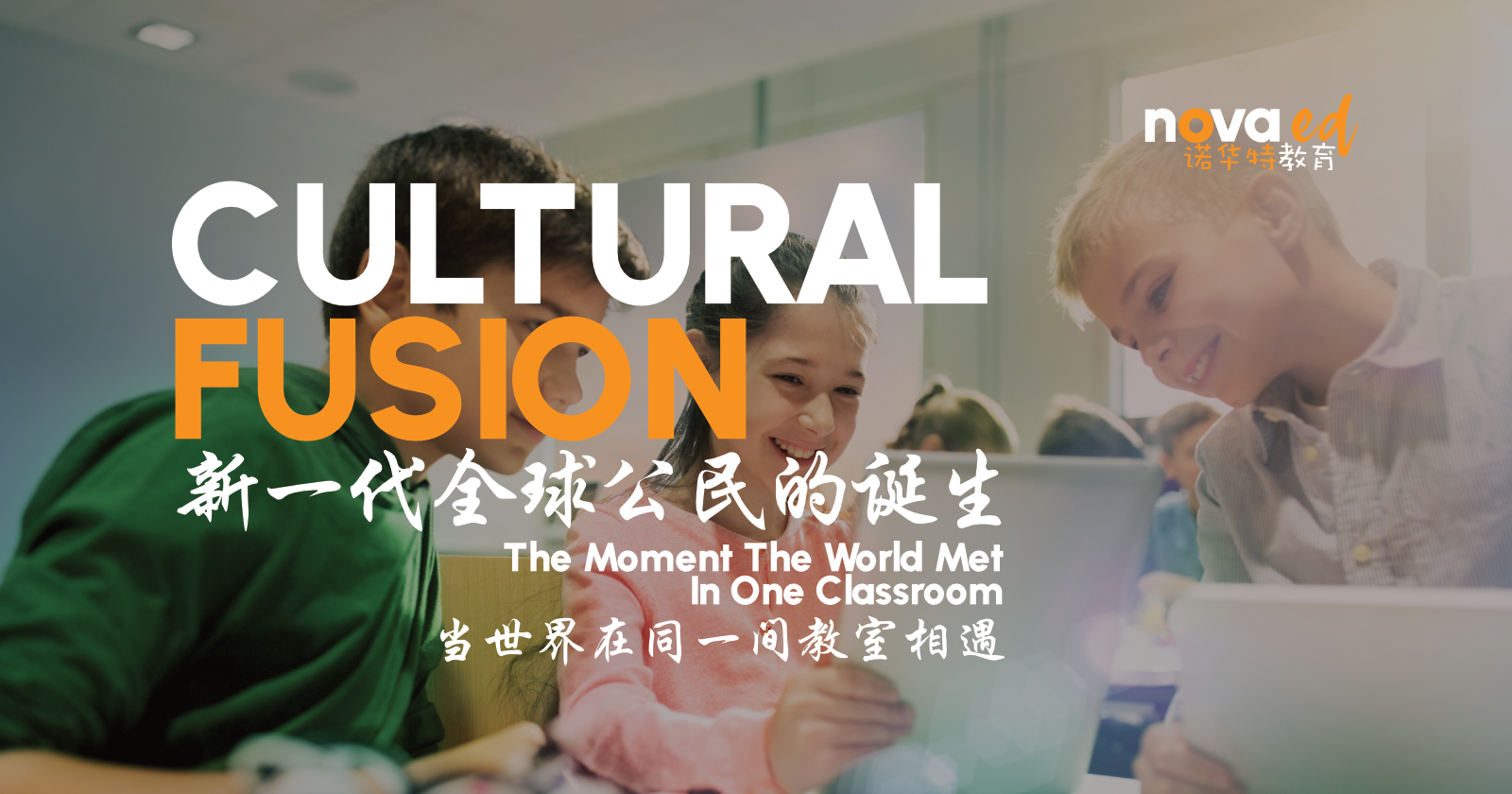
The bell rings at an international school in Bangkok.
Inside a sun-lit makerspace, you’ll find Mei from Shanghai, Tomas from Madrid, and Leila from Nairobi leaning over a prototype made of bamboo, recycled bottles, and micro-sensors.
They’re trying to solve one of Southeast Asia’s most significant problems — urban flooding.
Their idea? A water-sensing barrier that adjusts drainage using solar energy and real-time data.
But what’s truly remarkable isn’t the tech — it’s the teamwork.
They brainstorm in three languages, compare drainage systems from their home countries, and debate how local customs might affect how people use the invention. By the time they’re done, they’ve built more than a project.
They’ve built understanding.
That’s the quiet magic of cultural fusion — when young people blend languages, traditions, and ideas to create something no single culture could imagine alone.
Walk into almost any international school and you’ll see flags, festivals, and food fairs celebrating diversity. But cultural fusion goes further than that — it’s about what happens after the parade.
It’s when a Korean student quotes Confucius in a debate about ethics in AI.
When a British-Chinese teen designs an app that translates slang between Mandarin and English to help new students fit in.
When an entire classroom realizes that cultural difference isn’t a barrier — it’s a brainstorming tool.
Research backs it up. Studies from Frontiers in Education and Cambridge University Press show that when students learn to view global issues through multiple cultural lenses, they become more empathetic, creative, and adaptable — the very skills employers and universities prize most.
But families don’t need a journal article to see it. They can see it in their children — in the way they ask deeper questions, negotiate perspectives, and find common ground without losing themselves.
At Dulwich College Shanghai, students re-imagined how local markets could cut down plastic waste. Mixing Swedish recycling ideas with Chinese community action, they created bilingual “zero-waste market days.” What started as a school project now influences waste-sorting programs across the district.
At UWC Atlantic College in Wales, students from over 90 nations team up each year to tackle real global problems. One group blended Kenyan micro-finance concepts with Norwegian clean-energy models, creating a zero-waste startup that now supports coastal farmers.
At Cranleigh Abu Dhabi, Emirati and expat students co-developed an app that teaches sustainable living through Arabic storytelling traditions — merging faith, culture, and innovation into a lesson in harmony.
Each project is a small miracle of understanding: different ways of thinking becoming a single language of action.
Today’s best international schools don’t just teach culture — they use it.
Lessons in literature explore migration stories from Africa and Asia side by side.
Science projects link indigenous farming methods with modern engineering.
Student councils are multilingual, multicultural micro-governments learning to compromise, vote, and listen.
And some schools, like Western Academy of Beijing or UWC Thailand, go a step further with the Global Citizen Diploma (GCD) — a credential that measures not just grades, but how students serve, empathize, and collaborate across borders.
It’s proof that education can measure who a student is becoming, not just what they can memorize.
Ask any parent in an international school café what they value most, and the answer often isn’t grades. It’s growth.
They’ll tell you about the moment their child stood up for a classmate from another country.
Or how family dinners turned into conversations about world events.
Or how their once-shy teen now confidently translates between cultures — not just in language, but in perspective.
Cultural fusion is what turns knowledge into wisdom.
It’s what helps our children see that the world isn’t divided into “us” and “them,” but built from “we.”
Tomorrow’s leaders won’t be defined by their passports or accents.
They’ll be the ones who can walk into a room full of difference — and build unity.
They’ll be the child who speaks three languages but listens in ten.
The graduate who feels equally at home in Nairobi, New York, or Nanjing.
The entrepreneur who combines African storytelling, European design, and Asian technology to create something breathtakingly new.
This is the generation international schools are raising right now — one fusion project, one shared lunch table, one heartfelt conversation at a time.
At NovaEd, we believe cultural fusion isn’t just an outcome — it’s the art of becoming global.
Every story we share, every school we partner with, and every child we celebrate reflects a simple truth:
when cultures meet, creativity ignites.
The future won’t belong to those who stand apart, but to those who can stand together — blending wisdoms, traditions, and ideas into something brighter than the sum of its parts.
Because the world doesn’t need more competition. It needs collaboration — and classrooms where cultural fusion is the daily language of learning.

Join the NovaEd Network and Make Your Mark in Education
ADD YOUR LISTING arrow_forward


Copyright © 2025 Novateur Consulting | Nova Education (沪ICP备2025129833号). Proudly Powered By www.cu3ed-design.com




.jpg)

.jpg)
 Support