
 Find Schools
  Classifieds
  Experts
  Jobs
Jobs  Family Activities
  News & Publications
  Events
  Services
  Articles
  Community
 - The Go-To Directory for Quality Education Call us on: +86 139 1706 3480
- font_download Advertise With Us
- store List Your Organization
.jpg)
There is a moment many parents recognize, even if they struggle to describe it clearly.
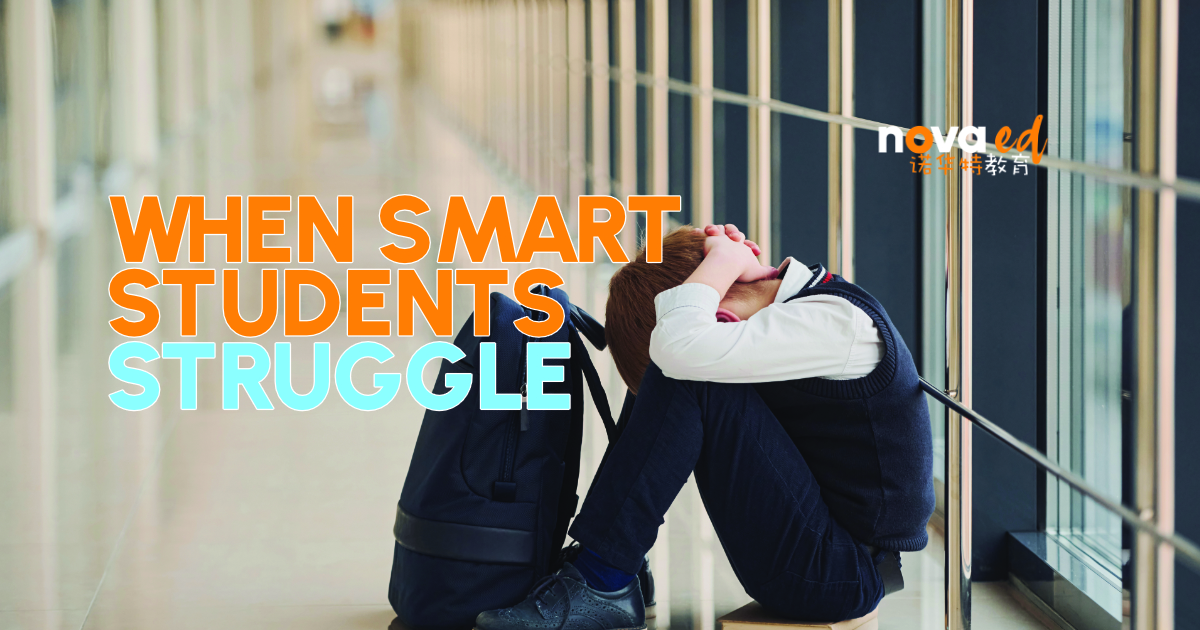
Their child is doing everything they are supposed to do. Homework is submitted. Teachers report no serious concerns. Test results sit comfortably within expectations. And yet something feels… off. The child is quieter. More hesitant. Less curious. Learning has become something to manage rather than something to explore.
At the same time, we see other children move through school with an almost effortless sense of ease. They adjust quickly to new teachers, new classrooms, even new countries. When they stumble, they recover. When expectations rise, they stretch rather than retreat.
The difference is rarely intelligence. It is rarely effort. And it is almost never luck.
It is confidence — not the kind that shows up loudly, but the kind that lives quietly inside a child and shapes how they meet the world.
Confidence is the unseen force that determines whether a student leans into challenge or pulls away from it. It decides whether feedback feels like information or judgment, whether change feels like opportunity or threat. Long before it affects academic outcomes, it shapes emotional well-being, motivation, and a child’s relationship with learning itself.
What is often misunderstood is that confidence is not a fixed trait. Children are not born with a set amount of it. Confidence is built slowly, through thousands of small interactions, expectations, and emotional signals. It grows when children feel safe enough to try, supported enough to fail, and understood enough to remain themselves.
This is why school environments matter so deeply, often in ways that are invisible on prospectuses or ranking tables.
In some schools, learning is framed as a performance. Success is public, comparison is constant, and mistakes are something to move past quickly. For certain students, this environment can be motivating. For others, it creates a quiet, accumulating pressure. They begin to associate learning with risk, self-worth with results, and effort with exposure. Over time, confidence erodes, not because the child is incapable, but because the environment asks them to be someone they are not yet ready to be.
In other settings, learning is framed as a process. Questions are welcomed. Struggle is expected. Progress is noticed even when outcomes are still forming. Children in these environments are more likely to develop internal confidence — the belief that ability grows through effort, that mistakes carry information, and that adults are allies rather than judges.
This distinction explains why some students thrive across almost any school context. They carry with them an internal sense of stability. When expectations change, they adjust. When challenges arise, they respond with curiosity rather than fear. Their confidence is not dependent on a single teacher, subject, or result.
Other students, equally capable, may find each transition destabilizing. A new school, a new curriculum, or even a new academic year can feel overwhelming. Not because they lack ability, but because their confidence has become conditional - dependent on familiarity, predictability, or external validation.
Parents often feel this most strongly during school transitions. A move that looks sensible on paper can trigger unexpected anxiety, withdrawal, or resistance. Families may interpret this as a poor fit with the school, when in reality, the child’s confidence was already fragile before the change occurred.
This is where child-centric thinking becomes essential.
Choosing the “best” school is far less important than choosing an environment that actively strengthens a child’s internal confidence. Prestige, results, and reputation matter, but only when they align with how a child learns, relates, and grows. A highly competitive environment can accelerate confidence in one child while quietly dismantling it in another.
Parents play a critical role here, often without realizing it. Confidence is reinforced or undermined daily at home, in how success is discussed, how failure is handled, and how pressure is framed. Children who feel that love and approval are stable, not tied to performance, are far more resilient in demanding environments. Those who sense that outcomes define worth may appear compliant and high-achieving, yet carry a deep fear of getting things wrong.
When we step back and observe carefully, the signs are usually there. Thriving children tend to speak openly about what they are learning, not just what they are achieving. They show curiosity beyond what is required. They recover from setbacks without losing their sense of self. Learning feels expansive rather than exhausting.
Children who are coping rather than thriving often look “fine” from the outside. Inside, learning has narrowed. Risk is avoided. Feedback is feared. Energy is spent managing expectations rather than engaging deeply.
The tragedy is that this distinction is easy to miss — until confidence has already begun to erode.
In a world where children will change schools, careers, and even countries multiple times, confidence becomes one of the most valuable educational outcomes we can nurture. It determines adaptability, well-being, and the ability to keep learning long after formal schooling ends.
The goal of education should never be to see whether a child can survive an environment. It should be to help them grow strong enough to meet many.
When we understand the confidence gap, we stop asking why some children are “naturally successful” and start asking better questions — about environments, alignment, and what our children truly need in order to thrive.
In essence, confident students are not created by chance.
They grow where children feel seen, supported, and trusted to become themselves — and that is where real education begins.

Join the NovaEd Network and Make Your Mark in Education
ADD YOUR LISTING arrow_forward


Copyright © 2025 Novateur Consulting | Nova Education (沪ICP备2025129833号). Proudly Powered By www.cu3ed-design.com










 Support