
 Find Schools
  Classifieds
  Experts
  Jobs
Jobs  Family Activities
  News & Publications
  Events
  Services
  Articles
  Community
 - The Go-To Directory for Quality Education Call us on: +86 139 1706 3480
- font_download Advertise With Us
- store List Your Organization
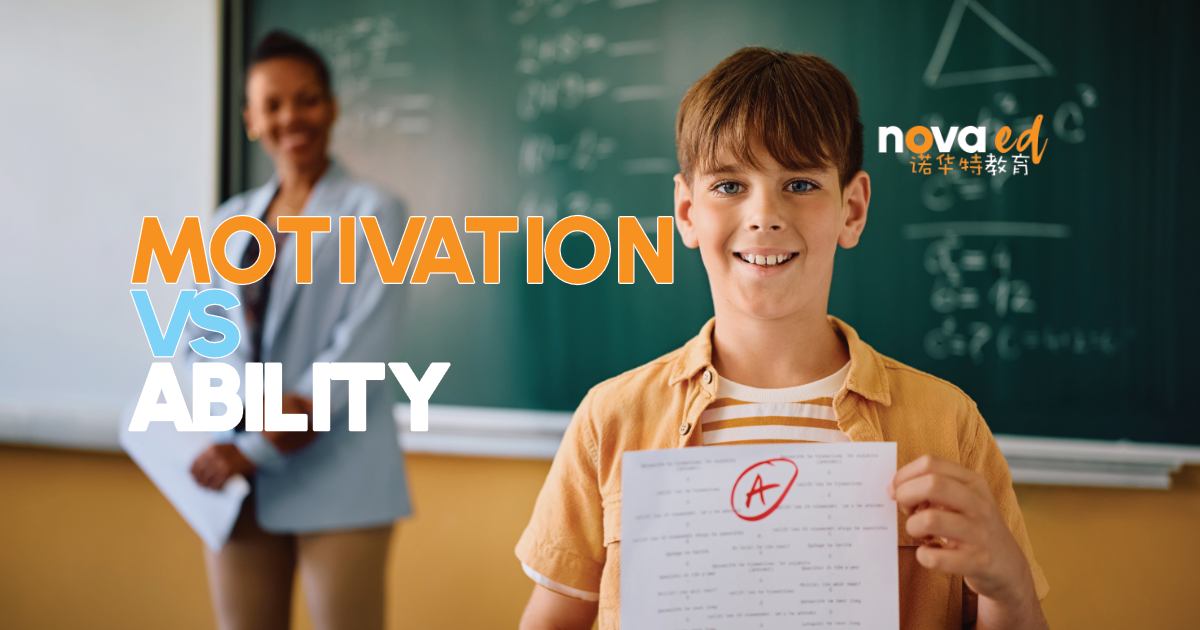
There is a particular kind of parental concern that rarely announces itself dramatically. It emerges quietly in teacher conferences where grades appear respectable, yet the conversation carries a subtle undertone of disappointment. A student is described as bright, articulate, perceptive. Then comes the familiar qualification: capable of more.
For families in Shanghai, Singapore, London, Dubai, and other global education hubs, this pattern is increasingly familiar. Chinese parents investing in bilingual or international pathways encounter it. Expatriate families relocating across continents encounter it. School leaders discuss it in professional forums. A child demonstrates intellectual strength, yet performance does not consistently reflect that strength.
The instinctive response is to focus on discipline or effort. Yet the deeper explanation lies in a distinction that modern educational psychology has examined for decades: the difference between ability and motivation
Ability refers to cognitive capacity. It reflects reasoning skills, memory, language proficiency, and analytical strength. Motivation, however, is the psychological energy that directs those abilities toward sustained engagement. It determines whether a student applies effort, persists through challenge, and recovers from setbacks.
Research across multiple disciplines supports this distinction. Carol Dweck’s work on growth mindset demonstrates that students who believe abilities can be developed through effort show greater resilience and academic improvement. Edward Deci and Richard Ryan’s Self-Determination Theory identifies autonomy, competence, and relatedness as core psychological needs that sustain intrinsic motivation. Angela Duckworth’s research on grit highlights perseverance and passion for long-term goals as critical predictors of achievement. Across these frameworks, a consistent theme emerges: intelligence alone does not guarantee sustained performance.
In international school environments, where academic standards are high and competition for university placement is visible, the interaction between ability and motivation becomes particularly pronounced. These institutions often provide rigorous curricula such as the International Baccalaureate, A-Levels, or Advanced Placement programs. While intellectually demanding, these frameworks also require sustained self-direction. Students must manage extended projects, research essays, interdisciplinary tasks, and complex assessments. Cognitive strength is essential, but it is insufficient without psychological engagement.
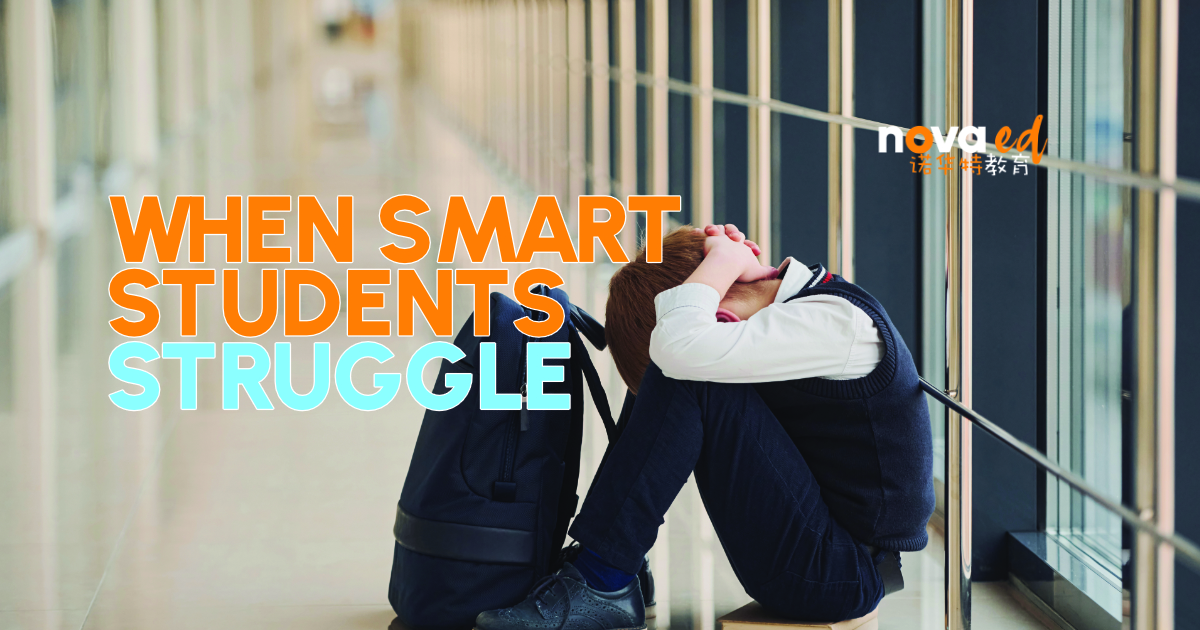
One of the most common pathways to underperformance among bright students begins in the early years of schooling. Children who grasp concepts quickly often experience learning as relatively effortless. They receive praise for being smart rather than for persisting through difficulty. Because the material does not initially require deep struggle, habits of deliberate practice and resilience may not fully develop. When genuine academic challenge appears later, particularly during secondary school transitions or examination years, the unfamiliar experience of sustained difficulty can feel destabilizing. Students who previously relied on natural aptitude may hesitate to adopt new strategies. Avoidance, procrastination, or inconsistent effort may follow. The issue is not diminished intelligence but underdeveloped academic stamina.
Another dynamic involves identity and expectation. In many Chinese families, education represents opportunity, mobility, and security. Academic achievement is closely tied to family aspiration. In internationally mobile families, educational success often symbolizes stability amid relocation. When a child is labeled as gifted or highly capable, that label can become part of personal identity. Performance is no longer simply about learning; it becomes about preserving a self-concept. If effort leads to visible struggle, students may interpret that struggle as evidence that they are not as capable as others believe. To protect identity, some reduce visible effort. If outcomes decline, the narrative can be attributed to insufficient effort rather than insufficient ability. What appears externally as underachievement may internally be a strategy of self-protection.
Curriculum alignment also plays a significant role. Not all bright students thrive in the same pedagogical structures. An analytically inclined learner may excel in the linear progression and subject specialization of A-Levels but feel unsettled in the inquiry-based, interdisciplinary nature of the IB Diploma Programme. A creative thinker who thrives on synthesis and exploration may disengage in environments dominated by examination drills. In bilingual schools, additional cognitive load adds complexity. Processing content across languages requires sustained mental energy. Temporary fatigue may be misinterpreted as declining motivation when it reflects adaptation to linguistic demands. In such cases, the mismatch between learning style and educational design influences engagement more than raw intelligence does.
Belonging and psychological safety further influence performance. Contemporary neuroscience underscores the connection between emotional security and cognitive functioning. When students feel socially accepted and culturally understood, stress levels decrease and working memory functions more effectively. International schools are often culturally diverse, which offers rich opportunities for global citizenship. However, frequent transitions, common among expatriate families, require continuous social adaptation. Each move involves new peer groups, new norms, and new academic expectations. During these adjustment periods, motivation may fluctuate. Academic performance can temporarily dip while psychological resources are directed toward adaptation.
Parental involvement, though often rooted in care and commitment, can also influence motivation. In competitive education environments, it is common to supplement schooling with tutoring, enrichment classes, and structured schedules. While such support can strengthen mastery, excessive external control may reduce intrinsic motivation. Self-Determination Theory emphasizes autonomy as central to sustained engagement. When students perceive that decisions are consistently made for them rather than with them, their sense of ownership can diminish. Compliance may remain intact, but internal drive weakens.
The implications extend beyond individual families. The international school sector is gradually redefining what success looks like. University admissions remain important, yet leading institutions increasingly track broader indicators of student development, including leadership, creativity, community engagement, and resilience. Employers and higher education institutions consistently report valuing adaptability, collaboration, and ethical reasoning. These qualities emerge not from cognitive capacity alone but from motivated, sustained engagement with complex challenges.
Within the Chinese context, the integration of international curricula into longstanding educational traditions presents both opportunity and tension. Historically, diligence and disciplined practice have been central strengths of the Chinese education system. As inquiry-based models gain prominence in bilingual and international schools, families sometimes observe temporary fluctuations in visible performance. Students accustomed to highly structured instruction may initially struggle with open-ended tasks requiring independent questioning. This adjustment period does not indicate declining ability; rather, it reflects the cognitive shift toward autonomy and critical thinking.
For globally mobile families, continuity poses a different challenge. Moving between national systems can disrupt academic sequencing. Assessment styles vary. Expectations for participation differ. A student who excelled in one country may appear less confident in another while adapting to new frameworks. Motivation is closely tied to stability and predictability. When those elements are temporarily absent, engagement can waver.
When ability and motivation align, however, the change is observable. Students demonstrate sustained curiosity. They engage deeply with feedback and revise work thoughtfully. They persist through setbacks without interpreting them as personal failures. Their academic performance becomes more consistent, but more importantly, their relationship with learning matures. They view challenge not as threat but as growth.
This alignment is not accidental. It results from an environment that balances rigor with support, expectation with empathy, and structure with autonomy. Teachers who emphasize effort, strategy, and progress rather than fixed labels contribute to this culture. Parents who frame setbacks as information rather than verdicts reinforce it at home.
Reconsidering the notion of potential is essential. Potential should not be equated solely with accelerated academic output. It encompasses intellectual curiosity, emotional resilience, cultural awareness, and adaptive thinking. Some students develop these capacities gradually, particularly when educational environments are recalibrated to suit their evolving needs. Viewing development as dynamic allows families and schools to respond thoughtfully rather than reactively.
For school leaders and policymakers, the lesson is clear. Designing systems that cultivate intrinsic motivation alongside academic mastery is not a peripheral objective; it is central to preparing students for an uncertain future. Rapid technological change, including the expansion of artificial intelligence, demands lifelong learners capable of self-direction. Intelligence may provide initial advantage, but sustained motivation determines long-term trajectory.
For parents, the conversation invites reflection rather than urgency. When feedback suggests untapped capability, it is tempting to intensify oversight or increase supplementary instruction. Yet deeper questions often yield more meaningful solutions. Does the child feel sufficiently challenged but not overwhelmed? Is effort recognized as much as outcome? Does the school environment align with the child’s cognitive profile and personality? Does the child experience both autonomy and belonging?
In many cases, restoring motivation involves realignment rather than escalation. Adjusting expectations, refining learning strategies, or reassessing school fit can reenergize engagement. The goal is not to eliminate challenge but to ensure that challenge feels purposeful rather than threatening.
Bright children who underperform are not paradoxes. They are signals. They remind families and institutions that intelligence alone is not the engine of sustained achievement. Engagement, identity, and environment shape whether cognitive potential translates into consistent performance.
In the evolving global education landscape, the distinction between ability and motivation carries strategic importance. Schools that understand this dynamic will not merely produce high scorers; they will cultivate resilient, self-directed learners. Families who appreciate this nuance will interpret underperformance not as failure but as feedback.
Intelligence opens possibilities. Motivation determines how far those possibilities extend.

Join the NovaEd Network and Make Your Mark in Education
ADD YOUR LISTING arrow_forward


Copyright © 2025 Novateur Consulting | Nova Education (沪ICP备2025129833号). Proudly Powered By www.cu3ed-design.com










.jpg)
 Support