
 Find Schools
  Classifieds
  Experts
  Jobs
Jobs  Family Activities
  News & Publications
  Events
  Services
  Articles
  Community
 - The Go-To Directory for Quality Education Call us on: +86 139 1706 3480
- font_download Advertise With Us
- store List Your Organization
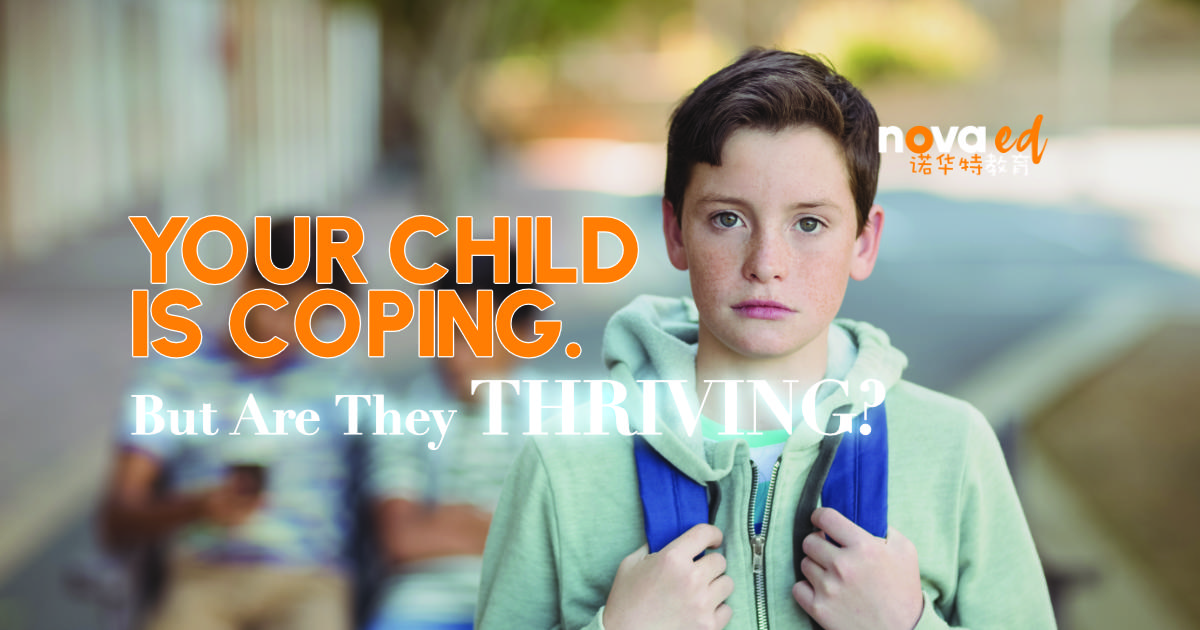
Most school choices don’t fail loudly.
They fail quietly.
There is rarely a dramatic incident, no single meeting that makes everything suddenly obvious. Instead, the mismatch between a child and a school reveals itself slowly, through subtle shifts that are easy to explain away, especially in families who have invested time, emotion, and significant financial resources into getting the decision “right.”
Parents often tell themselves it is just an adjustment period. A phase. A normal part of growing up. And sometimes, they are right. But sometimes, those early signals are not transitional at all. They are indicators that the environment is not serving the child as intended.
By the time many families recognise what is truly happening, months or even years have passed, and the child has already paid the cost emotionally, socially, or academically.
This article is not about panic, blame, or regret. It is about awareness. Because when parents know what to look for early, school choice becomes a living decision rather than a fixed one, and children are given the chance to course-correct before disengagement becomes deeply rooted.
One of the most common reasons families miss early warning signs is that the school appears, objectively, to be excellent.
The campus is impressive. The curriculum is respected. University placements are strong. The peer group looks motivated and capable. From the outside, everything signals success.
But education is not experienced on paper. It is lived daily, emotionally and cognitively, by a child who must navigate the rhythm, expectations, culture, and unspoken norms of that environment.
A school can be outstanding in reputation and still be wrong for a particular learner.
When parents equate institutional prestige with individual fit, they often override their own instincts. Small concerns are rationalised. Discomfort is reframed as necessary pressure. And early misalignment is mistaken for a character-building challenge rather than a structural mismatch.
This is where noticing too late often begins.
One of the earliest signals that a school may not be working is not declining grades, but declining curiosity.
Children who once asked questions, shared ideas freely, or spoke enthusiastically about what they were learning may become vague, non-committal, or disengaged when asked about their day. Homework gets done, but without interest. Projects are completed efficiently, but without pride or ownership.
This shift is easy to miss, especially in high-performing environments where compliance is rewarded, and results are prioritised. A child can appear academically “fine” while slowly disconnecting from the learning process itself.
Over time, this can lead to surface-level achievement without deep understanding, intrinsic motivation, or intellectual confidence. The child learns how to perform, but not how to explore, question, or enjoy learning.
Parents often notice this only in hindsight, when motivation has eroded so far that re-engagement becomes difficult.
Another subtle warning sign appears in the emotional tone children bring home.
Some students become unusually tired, withdrawn, or emotionally flat. Others become irritable, anxious, or hyper-self-critical. These changes are often attributed to growing up, academic rigor, or external stressors, particularly during transition years.
But emotional exhaustion is not the same as healthy challenge.
In environments where expectations are misaligned with a child’s developmental stage, temperament, or learning style, students expend enormous energy simply trying to keep up emotionally. They may internalise pressure, suppress frustration, or avoid asking for help in order to appear capable.
Parents may interpret this emotional self-containment as maturity or resilience. In reality, it can be a sign that the child does not feel psychologically safe enough to struggle openly.
When emotional fatigue becomes the norm, learning stops being expansive and starts becoming survival-based.
Belonging is one of the strongest predictors of long-term school success, yet it is often assessed too narrowly.
Parents may ask whether their child has friends, whether they are invited to birthday parties, or whether there are no obvious social conflicts. But true belonging goes deeper than social participation.
Children who feel out of place may still function socially while never feeling fully seen or accepted. They may adjust their behaviour to fit dominant norms, hide parts of themselves, or feel constantly “on the edge” of peer groups without ever settling.
This is particularly common in schools with strong cultural, linguistic, or personality norms. Children who do not naturally align with those norms often adapt quietly, rather than resist openly.
Years later, parents may realise their child never truly felt at home in the school community, even though there were no dramatic social red flags at the time.
Many schools proudly communicate their support structures, counselling services, learning support departments, and wellbeing initiatives. On paper, everything appears to be in place.
But access matters more than availability.
If a child does not feel comfortable using support, does not understand how to advocate for themselves within the system, or senses that needing help carries stigma, those resources remain unused.
Parents may assume that because support exists, their child is receiving it. In reality, many students quietly struggle without ever triggering formal intervention thresholds.
This gap often becomes visible only when academic stress escalates, emotional distress becomes obvious, or the child finally voices what they have been carrying alone.
By then, early opportunities for gentle adjustment have often passed.
Perhaps the most concerning sign that a school is not working appears in how a child sees themselves.
Children begin to describe themselves differently. They label themselves as “not academic,” “bad at school,” “slow,” or “not good enough,” even when there is no objective evidence to support these beliefs.
This shift is especially dangerous because it becomes self-reinforcing. Once a child internalises a negative academic identity, they stop taking risks, stop trying new strategies, and stop believing that effort will lead to improvement.
Parents often focus on grades or teacher feedback and miss the deeper erosion of self-belief happening beneath the surface.
By the time confidence loss is obvious, it is often deeply embedded.
Even when concerns surface, many families hesitate to act.
There are practical reasons. Changing schools can be disruptive. Admissions timelines are complex. Fees have already been paid. Siblings may be involved. Relocation or visa considerations add further layers of difficulty, particularly for internationally mobile families in China.
But there are also emotional reasons.
Parents worry about sending the wrong message. They fear that changing schools signals failure, lack of resilience, or inconsistency. They hope that “one more term” will be enough for things to settle.
In high-achievement cultures, endurance is often valued over alignment. Parents are encouraged to trust systems rather than question fit.
Unfortunately, children often interpret prolonged inaction as confirmation that their discomfort is something they must endure alone.
When school mismatch is left unaddressed, the long-term consequences can extend well beyond academics.
Students may disengage from learning entirely, associating education with stress rather than growth. They may develop anxiety around performance, avoid challenge, or lose trust in their own instincts.
In adolescence, prolonged misalignment often manifests as burnout, oppositional behaviour, or emotional withdrawal. In younger children, it may appear as regression, somatic complaints, or behavioural changes that seem unrelated to school on the surface.
The tragedy is that many of these outcomes are preventable when early signs are recognised and addressed thoughtfully.
One of the most powerful mindset shifts parents can make is to stop viewing school choice as a one-time decision.
Children grow. Families change. Learning needs evolve. What worked at age six may not work at twelve. What felt right during early primary years may no longer serve a child entering adolescence.
Healthy education planning treats fit as dynamic rather than fixed.
This does not mean changing schools impulsively or frequently. It means staying actively engaged with how a child is experiencing their environment, rather than assuming that enrollment equals alignment.
It also means recognising that changing course is not failure. It is responsiveness.
At NovaEd, we work with families who often say the same thing: “I wish we had understood this sooner.”
Our role is not to push change, but to bring clarity.
Through structured conversations, student-centred assessments, and deep knowledge of the international and bilingual school landscape in China, we help families distinguish between healthy challenge and harmful mismatch.
We look beyond marketing narratives and rankings to examine learning culture, support accessibility, peer dynamics, and developmental alignment. Most importantly, we help parents listen to what their child’s experience is actually telling them.
Sometimes the outcome is reassurance and a refined strategy within the same school. Sometimes it is a carefully planned transition. In all cases, the goal is the same: to protect the child’s relationship with learning and with themselves.
Parents do not miss early signs because they are inattentive. They miss them because they are hopeful, committed, and deeply invested in their child’s success.
But the most important educational decisions are not about endurance. They are about fit, growth, and long-term well-being.
When parents learn to notice earlier, they give their children something far more valuable than prestige or performance.
They give them permission to thrive.
And that is the foundation of every successful education journey.

Join the NovaEd Network and Make Your Mark in Education
ADD YOUR LISTING arrow_forward


Copyright © 2025 Novateur Consulting | Nova Education (沪ICP备2025129833号). Proudly Powered By www.cu3ed-design.com





.png)
.png)
 Support