
 Find Schools
  Classifieds
  Experts
  Jobs
Jobs  Family Activities
  News & Publications
  Events
  Services
  Articles
  Community
 - The Go-To Directory for Quality Education Call us on: +86 139 1706 3480
- font_download Advertise With Us
- store List Your Organization
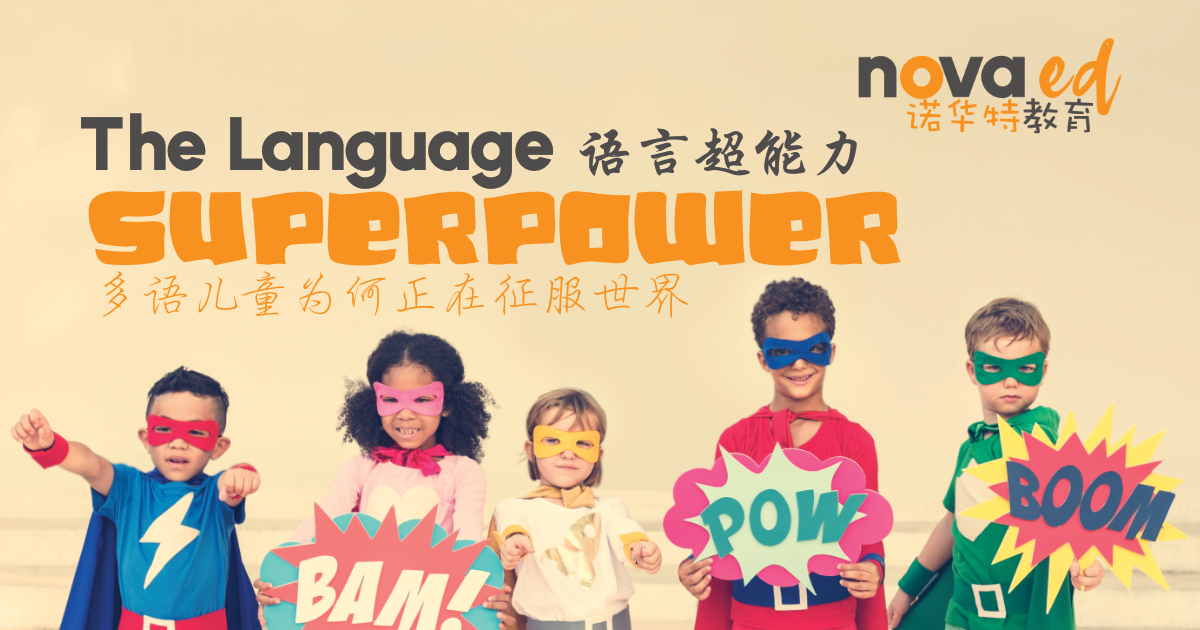
Walk through the hallways of any international school and you’ll hear something remarkable: a natural symphony of languages. A group of students may switch from English to Mandarin to Spanish in a single conversation—without missing a beat. What sounds casual is actually extraordinary. Behind this effortless code-switching lies one of the most underrated competitive advantages of the 21st century: multilingualism.
In a world increasingly powered by global communication, international school students aren’t just bilingual—they’re linguistically agile, culturally adaptive, and cognitively advanced. This “language superpower” is quietly shaping future CEOs, diplomats, and innovators who will lead across borders.
Modern neuroscience confirms what educators have long observed: multilingual brains are built differently.
Studies from institutions like Harvard, Cambridge, and the University of Edinburgh reveal that students fluent in two or more languages exhibit higher executive function, stronger memory, sharper attention control, and greater problem-solving ability.
Put simply—multilingualism is brain training. Switching between languages strengthens neural pathways responsible for focus and creativity, while interpreting meaning across cultures enhances empathy and adaptability.
For international schools, language learning isn’t a “subject.” It’s a strategy. Schools like Yew Chung International School (YCIS) or Western International School of Shanghai (WISS) integrate bilingual instruction across subjects, teaching math in English one week and science in Chinese the next. The result? Students learn to think, not just translate.
While diplomas open doors, language opens hearts—and markets.
In today’s interconnected industries, from finance and technology to diplomacy and media, cross-cultural fluency defines leadership. Global employers are actively seeking multilingual talent because they bridge worlds.
International school alumni embody this power. From Dulwich College graduates leading global sustainability NGOs to Concordia Shanghai alums heading regional innovation teams, their ability to think and connect in multiple languages transforms potential into influence.
International schools don’t just teach languages—they live them.
Walk into a Grade 5 classroom and you might see students presenting a project in Mandarin, translating their findings into English, and debating next steps in French or Korean. This dynamic environment normalizes diversity and builds global confidence.
The best schools design curricula that ensure languages aren’t siloed. For example:
These approaches cultivate a comfort with ambiguity and a joy in discovery—two traits global leaders share.
Data tells the story.
According to a LinkedIn Global Talent Report, multilingual professionals earn 10–15% higher starting salaries and are promoted faster in multinational firms. A British Council study found that 75% of global employers value intercultural competence more than technical skills.
International school graduates, fluent in both Western and Eastern modes of communication, bring that rare blend of intellect and intuition. They can navigate Chinese partnership meetings in the morning, pitch ideas in fluent English to a European boardroom by afternoon, and lead a multicultural team online by night—all without translation barriers or cultural missteps.
That’s not just linguistic ability—it’s leadership literacy.
In international education, language learning is character building.
Each new language carries its own logic, humor, and worldview. By internalizing multiple languages, students gain the ability to “think in color”—to view the same issue from multiple perspectives.
This cognitive empathy is why international school students often become bridge-builders in polarized environments. They’re fluent not just in grammar, but in grace.
When students from Shanghai discuss sustainability with peers in Geneva or Nairobi, they don’t just share vocabulary—they share values.
The outcomes speak for themselves:
These aren’t coincidences. They’re the ripple effects of linguistic education done right.
When students master multiple languages, they gain access not just to words—but to worlds.
At NovaEd, we believe language is not just a skill—it’s a superpower that transforms learning, careers, and lives.
By spotlighting international schools that nurture multilingual excellence, we reveal how global education is preparing children to lead a borderless future.
Parents choosing bilingual or multilingual pathways aren’t just future-proofing their children’s résumés—they’re empowering them to understand humanity itself.
Because in the end, the world doesn’t belong to those who speak the loudest.
It belongs to those who can listen, understand, and connect—in every language.
Multilingual education builds sharper, more adaptable thinkers.
Published by NovaEd (NovaEd.cn) — Empowering families to navigate international education with insight, data, and global perspective.

Join the NovaEd Network and Make Your Mark in Education
ADD YOUR LISTING arrow_forward


Copyright © 2025 Novateur Consulting | Nova Education (沪ICP备2025129833号). Proudly Powered By www.cu3ed-design.com
 Support